
Film preparation is not the same as a body transformation. In film the physical result has to serve the performance, the story, and the continuity of the production schedule. A training process that only focuses on appearance without considering what the body must repeatedly do on camera is not film prep. Personal training for actors. Availability is the pivotal outcome in film preparation. If an actor cannot perform the scenes required, everything else becomes irrelevant.
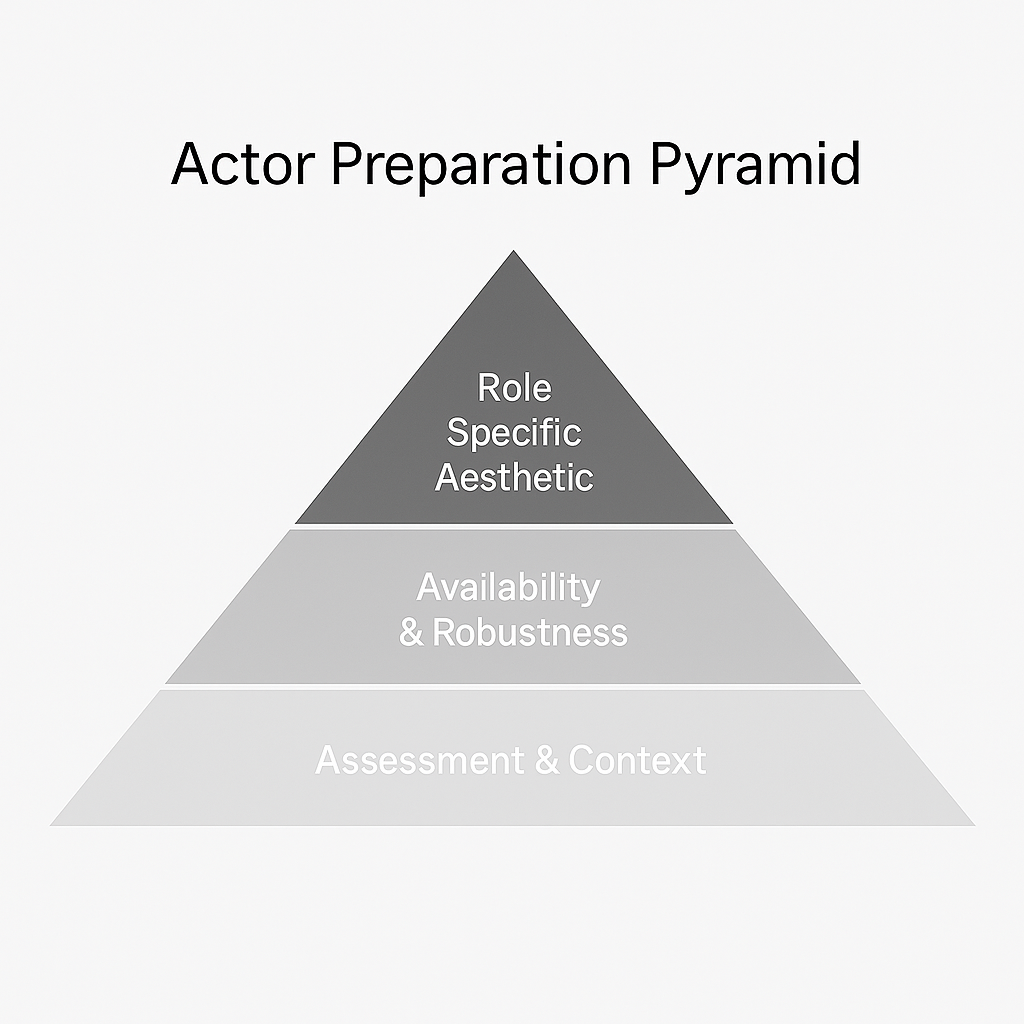
Most failed film prep comes from prioritising the wrong things in the wrong order. The training becomes a race for a look, rather than a health first structured process. The Action-Star Physique framework shows how that hierarchy applies in practice, while The Actor Prep Pyramid provides the correct hierarchy and sequence. It ensures the physical result is not only visually aligned with the role, but also durable, repeatable, and dependable throughout production.
The principles outlined here were applied in practice during the preparation for Moss & Freud. See how they were implemented in Training to Play Kate Moss
The look only matters if the actor stays healthy to perform.
The Model
The Actor Prep Pyramid is a three layer framework that sets the order of priorities in film training. Each layer builds on the one below it. This ensures that the actor can deliver the visual expression of the character without escalating risk or compromising their ability to perform reliably throughout a shooting schedule. Film role physical preparation.
This model recognises that whilst the aesthetic is crucial, the process must consider more than this. The body is an instrument of storytelling. The pyramid helps maintain the balance between artistic requirement and physical reality, while protecting the actor from unnecessary performance limiting risk.
The Actor Prep Pyramid protects the performance by protecting the performer.
Base Layer: Assessment and Context
The foundation of film preparation is understanding both the actor and the role. Before any training begins, we establish what the role requires, what the character physically communicates, and what the actor’s own starting point looks like. This means assessing movement ability, specific mechanics previous training, injury history, anthropometry, lifestyle and readiness to tolerate specific types of physical stress.
Context means identifying the physical demands of the role, and preparing the actor to tolerate those demands efficiently and repeatably. It ensures that training outputs are relevant to the work they will actually perform and the outcomes they actually need. And removes unnecessary load and work from the process. This keeps the training specific, measurable, aligned with the outcomes required, and prevents it driving towards a generic fitness plan.
Assessment defines point A so we can build a plan that reaches point B.
Middle Layer: Availability and Robustness
This is the layer that protects performance. It is the work that keeps the actor physically available throughout the schedule. Availability is influenced by load management, movement options, joint tolerance, recovery capacity, sleep, pacing, and fuelling. These variables determine how consistently the actor can repeat physical action under filming conditions.
Robustness means the body can tolerate different loads, directions, speeds, and volumes of work without breaking down. It is about increasing the margin for error so that the actor stays healthy even when real world conditions are less controlled than the gym. When this layer is built well, the top layer work becomes safer and more durable.
Robustness is the insurance policy that keeps the performer available to perform.
Top Layer: Aesthetic and Role Specific Expression
The top of the pyramid is the visual expression of the character. Actor body transformation. This is where we shape the outward physical look that aligns with the world of the film and what the production wants the audience to see. The aesthetic outcome is important, but it must be built on the stability of the first two layers so that the look is achievable without compromising health or availability.
This layer is where most people start, but in film preparation it is the last layer added. Once the actor has the mechanical capacity and robustness to tolerate the work, we can refine the look with precision. The aesthetic should support the storytelling of the character and not exist in isolation. The outcome here is defined by the production requirements, and the performers interpretation of how the characters will look.
The aesthetic only matters if it can be delivered without compromising the ability to perform
How To Create A Physique That Can Survive A Film Schedule
- Sequence the order of work correctly. Establish assessment and availability first, then build robustness, and then shape the aesthetic with precision.
- Match physical preparation to the job. The training must reflect what the role requires, not what a generic programme produces.
- Progress is reverse engineered from the required outcome and the fixed filming timeline. The plan works backwards from point B, then advances only at the speed the actor can tolerate without compromising availability.
- Protect margins. Mechanical variability, joint options, and movement capacity are what keep the actor available when conditions change.
- Align with production early. Timelines, wardrobe, stunt days, continuity, and shooting order influence how physical work should be phased.
- Prioritise recovery. Sleep, fuelling, and daily stress management are what hold the whole process together under pressure.
A successful film physique balances visual impact with physical durability.
A well executed film preparation process must operate to this standard. The role defines the outcome, the schedule defines the pace, and the training must support availability at every stage. When the work is built in the correct order, the physical result becomes a reliable tool for performance, not a risk factor. This is the professional expectation actors and productions should hold for film preparation.
Frequently Asked Questions
What is the difference between actor film prep and normal gym training?
Actor film prep is built around the demands of the role and the requirements of a shoot schedule. The training is sequenced so the actor stays available to perform consistently, not just to improve fitness metrics. The aesthetic is essential, but it must be built in a way that is safe, durable, and repeatable.
How far before filming should an actor start physical preparation?
Ideally 12 to 16 weeks before filming begins. This allows time for assessment, building capacity, and then shaping the aesthetic in a controlled way. Shorter timelines increase risk because they compress the process.
Can you build a film ready physique without compromising health or availability?
Yes. When the process is sequenced correctly, the aesthetic can be achieved without sacrificing tissue tolerance, energy availability, or recovery. The physique must support the shoot, not undermine it.
How do filming timelines and shooting schedules affect training planning?
The outcome and the deadlines are fixed, so the training is reverse engineered from point B. Stunt days, continuity, wardrobe, and shooting order all influence how physical stress is phased and progressed.
How do you determine what physical qualities a specific role requires?
It begins with assessment and understanding the story world the character lives in. Movement requirements, energy demands, and visual expression guide what qualities must be built. This makes the training specific, targeted, and relevant to the role.



Leave A Comment
You must be logged in to post a comment.