

Having worked as a personal trainer in London for over 25 years I have seen this industry evolve through countless cycles. What defines a successful personal trainer is not the trend they attach themselves to, or the tool they adopt at the right moment. It is their ability to help real people create meaningful and lasting change safely and consistently over time. In a city as competitive as London, longevity is never accidental. The trainers who last are the ones who commit to mastering their craft, who stay grounded and are lifelong learners. They learn from their clients, from their experiences, and from the experiences of others. They continue to deliver results year after year regardless of what the current trend looks like.
Mastering The Fundamentals
Mastering the fundamentals is what keeps results repeatable, predictable, and safe over time. The human body adapts based on clear principles. Tissue remodels when it is challenged appropriately, not maximally. Strength increases when loading is progressively applied. Hypertrophy occurs when mechanical tension is sufficient and recovery supports growth. Energy balance drives body composition change. Sleep, nutrition, and appropriately managed stress dictate how well someone can adapt to training. These principles are not new, but they are unchanging, and they are the foundation that every successful personal trainer must understand deeply. Understanding these fundamentals consistently and being able to apply them in practice is what forms the foundation of becoming a successful personal trainer.
The fundamentals are also about coaching in practice. It is not enough to know the theory. You must be able to teach someone how to move well, progress them safely, and adjust their program based on how they respond. The best trainers can take complex knowledge and translate it into simple, effective action that a client can apply. Mastery is not demonstrated by how complicated you can make things. It is shown by how well you can deliver the basics at a consistently high standard and apply them to each individual in front of you.
Mastery is not about complexity. It is about delivering the fundamentals at a consistently high standard
Putting In Time With Real People
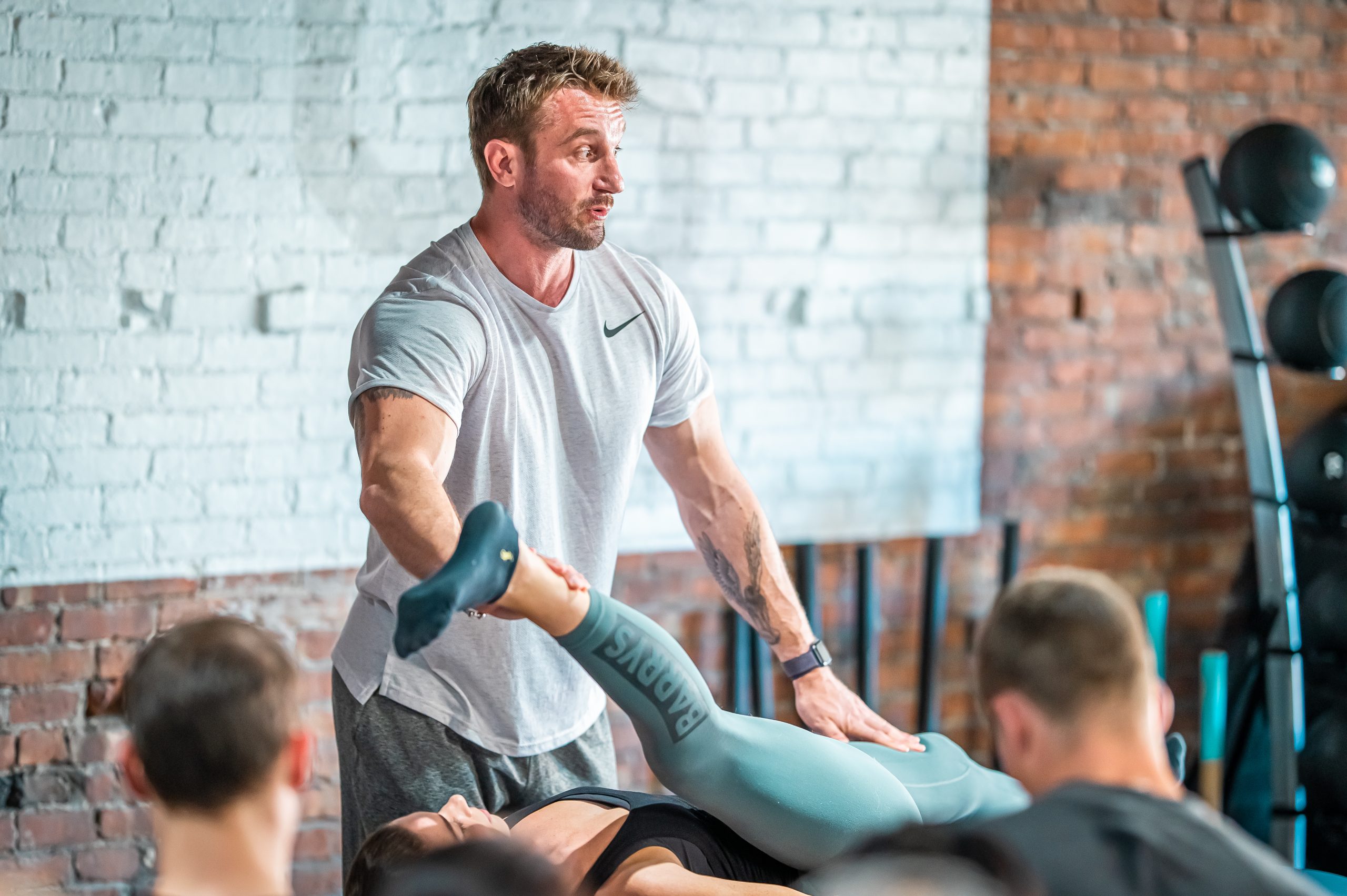
Time spent working with real people is where coaching skill is actually developed. Theory only becomes meaningful when you apply it to individuals with different backgrounds, goals, abilities, movement patterns, and life demands. In London especially, no two clients will ever present the same way. You learn how to assess, adjust, and respond by working through hundreds and thousands of repetitions of real human interactions. You learn what cues work, what progressions land, and how to modify sessions when life stress, fatigue, or injury show up.
Skill in coaching is earned through exposure. It comes from solving real problems in the real world. A successful personal trainer understands that progress is rarely linear and that each person requires an approach that is specific to them. Time on the gym floor is irreplaceable. It is where judgement is formed, where instincts are built, and where experience becomes the filter that informs decision making at the highest level.
Coaching skill is built through real world repetitions with real human beings. There is no substitute for time earned on the gym floor.
Being Service Oriented
Being a personal trainer is a service profession. It is about helping the client achieve the outcome that matters to them. The best trainers build their careers by putting the client’s needs, constraints, and priorities at the centre of every decision. It is about meeting the person where they are, understanding what they are working towards, and using your skill and judgement to take them there as effectively and safely as possible.
Service orientation also means accepting that the success belongs to the client, not the coach. Trainers take responsibility for the process. The more you make the work about the client’s outcome, the stronger your career foundations become. This is how trust is built over years and decades, not weeks and months.
The best trainers serve their clients first
Making The Program Fit The Person
Effective programming begins with understanding the individual in front of you. People do not move the same way. They do not load the same way. They do not express force, stability, or range the same way. Anthropometry, joint structure, movement history, injury history, and natural bias all influence how a body interacts with a movement. A successful personal trainer builds their program around the person rather than trying to make the person fit a template.
This is where coaching becomes a craft. You choose the patterns that achieve the desired adaptation, but you choose the variations and progressions that suit the mechanics of that specific client. Two people may need to develop hinge capacity, but the expression of that pattern may look different for each of them. It is not about standardising the method. It is about directing the adaptation in a way that works for the individual safely and effectively. This is how training becomes sustainable, impactful, and personal rather than generic.
Programs do not create results. People do. The program must be built around the person, not the other way around
Using Science With Real World Relevance
Science matters. Evidence gives us a framework for decision making and helps us understand what drives adaptation. But the value of science is in how well you can apply it. Research findings are not instructions. They are context. The best trainers can interpret evidence within the reality of coaching real people and make informed choices that improve outcomes in practice. Knowledge becomes skill when it is translated into change that a client can feel and sustain.
A successful personal trainer also understands the limitations within scientific literature. Study samples, sample sizes, study designs and the specific population being studied all matter. Research rarely generalises perfectly to the person standing in front of you. The most important sample you will ever work with is the single human being you are coaching in real time. Evidence gives direction, but that individual is the data that actually matters most.
A successful personal trainer knows when to simplify and when to be precise. They can identify which scientific principles are relevant to the person in front of them and which are interesting but not meaningful in that moment. Evidence is a tool, not a performance. Understanding the science is important, but the true skill is using it to guide real world progress in an individual body over time.
Science is only useful when you can apply it to create meaningful change in the real world.
Ignoring Fads And Trend Cycles
Training trends will always come and go. New methods appear, gain momentum, peak across social media, then disappear again once the novelty fades. Some ideas even return repeatedly under new branding. Over more than 25 years in the industry I have seen this cycle play out many times, and some of the popular current trends are on their 3rd or 4th iteration! What endures are the principles that consistently deliver results. The best trainers are not distracted by what is fashionable in the moment. They recognise that if something is only effective during its trend window, it was never the foundation to begin with.
Novelty can feel like progress, but it rarely delivers long term impact. The best personal trainers understand that building a career requires depth, not constant reinvention.
Fads benefit brands. Fundamentals benefit clients
The Outcome Is Results Delivered Safely
The best personal trainers are not just focused on producing change. They are focused on producing change that the client can tolerate, sustain, and benefit from over the long term. Safety is not a separate variable from progress. It is the foundation that makes progress possible. Training must create stimulus without compromising the body. The goal is not to see how much someone can endure, but to apply the right amount of stress at the right time to drive the adaptation they need.
When training is delivered safely, results accumulate. Progress becomes durable rather than volatile. Clients stay consistent, which means they stay in the process long enough to make meaningful improvements. In the short term this reduces injury risk and unnecessary setbacks. Over years this builds resilient bodies, sustainable habits, and long lasting outcomes. Longevity for clients is what ultimately creates longevity for the trainer.
Safety is not a limitation. It is what allows results to continue
This emphasis on judgement, safety and long-term availability underpins how I’ve built my work over the past 25+ years, which I outline in more detail on my About page.
Repetition Builds Expertise
Expertise is not created through isolated peaks of intensity or occasional breakthroughs. It is built from the accumulation of high quality work repeated over years. Skill develops when you return to the process repeatedly, refine small details, learn from each interaction, and continue to improve your craft even when nobody is watching. Repetition is what allows judgement to deepen and coaching quality to compound over time.
In London this process is accelerated and sharpened. The city exposes you to a huge range of bodies, movement histories, demands, and goals. Each client interaction becomes part of the data set that informs your decision making. Expertise is earned by doing the work, learning from the work, and continually raising the standard of the work. That is how skill becomes durable.
Consistency is the true differentiator. It is the reason some trainers last and others disappear.
Create Change, Don’t Just Curate It
There is a difference between presenting people who already possess desirable physical qualities, and developing those qualities in someone who does not yet express them. Selecting clients who already look a certain way or already perform at a high level may appear impressive externally, but it does not demonstrate the ability to create improvement. Curating people who already match an aesthetic or performance standard is not the same as coaching.
Real coaching is measured by the change you help create. A successful personal trainer is defined by their ability to improve movement, build capacity, and support clients in achieving meaningful progress that they were not expressing before. This is where depth is built and where careers become sustainable in the long term. When you can create change, not just display it, your work has value that endures across environments and trends.
The true test of a trainer is whether someone changes because of working with you.
Longevity Is Earned Through Consistency
A long career is never built in a single moment. It is built through the standard you hold every day, over many years, across many different clients and environments. The most successful personal trainers build trust slowly, maintain professionalism always, and commit to continual improvement long after the initial excitement fades.
In London this becomes the differentiator. It is a competitive environment with informed clients who expect experience and quality. Those who maintain their standard over time are the ones who remain relevant and in demand. In the end, this is what separates the best personal trainers from the rest.
Longevity is the outcome of standards held consistently over time, not moments of attention.
Frequently Asked Questions
What is the most important factor in becoming one of the best personal trainers in London?
The most important factor is the standard you hold consistently over time. London is competitive and clients have access to choice. Trainers who remain relevant and in demand are those who commit to continuous improvement, service, and results delivered safely and sustainably. There is no single moment that defines a career. It is the accumulation of standards upheld daily.
How do personal trainers avoid getting caught up in trends and fads?
You anchor yourself to principles, not novelty. Fundamentals do not expire. Fads do. If a method only works within the temporary hype cycle that surrounds it, it was never a true method. The best trainers ask better questions, evaluate relevance, and continue to prioritise what works repeatedly in real settings.
What should trainers focus on in the early years of their career?
Experience, exposure and coaching reps. Work with a wide variety of people. Learn how different bodies respond, how to cue effectively, how to modify patterns, and how to solve problems under real world constraints. Early career development is not about building brand identity. It is about building coaching competence that will support you for decades.
How does working with real people help develop coaching skill?
Real people teach you how to coach. Their responses to training become the feedback loop that shapes your judgement. Every session is data. Every client is a different puzzle. The ability to adapt, progress and refine decisions comes from time on the gym floor. You cannot learn this only through theory.
Why is the ability to create change more valuable than curating aesthetics or elite talent?
Because real coaching is measured by what you help someone become. Selecting clients who already look the part does not demonstrate coaching ability. Creating improvement in someone who does not start with those advantages is where skill is proven. Change is where careers are built.
References
Ericsson, K. A. & Pool, R. (2016). Peak: Secrets from the New Science of Expertise. Houghton Mifflin Harcourt.
Deci, E. L. & Ryan, R. M. (2000). The “What” and “Why” of Goal Pursuits: Human Needs and Self Determination. Psychological Inquiry, 11(4), 227–268.
Stanier, M. B. (2016). The Coaching Habit: Say Less, Ask More and Change the Way You Lead Forever. Box of Crayons Press.



Leave A Comment
You must be logged in to post a comment.