
I’m well aware that lots of people will disagree with my thoughts here and will insist that the ‘big 3’ barbell lifts of back squats, deadlifts and bench press should be the staple of any program. However, these are my thoughts on exercise choice that have worked and consistently produced results for my clients.
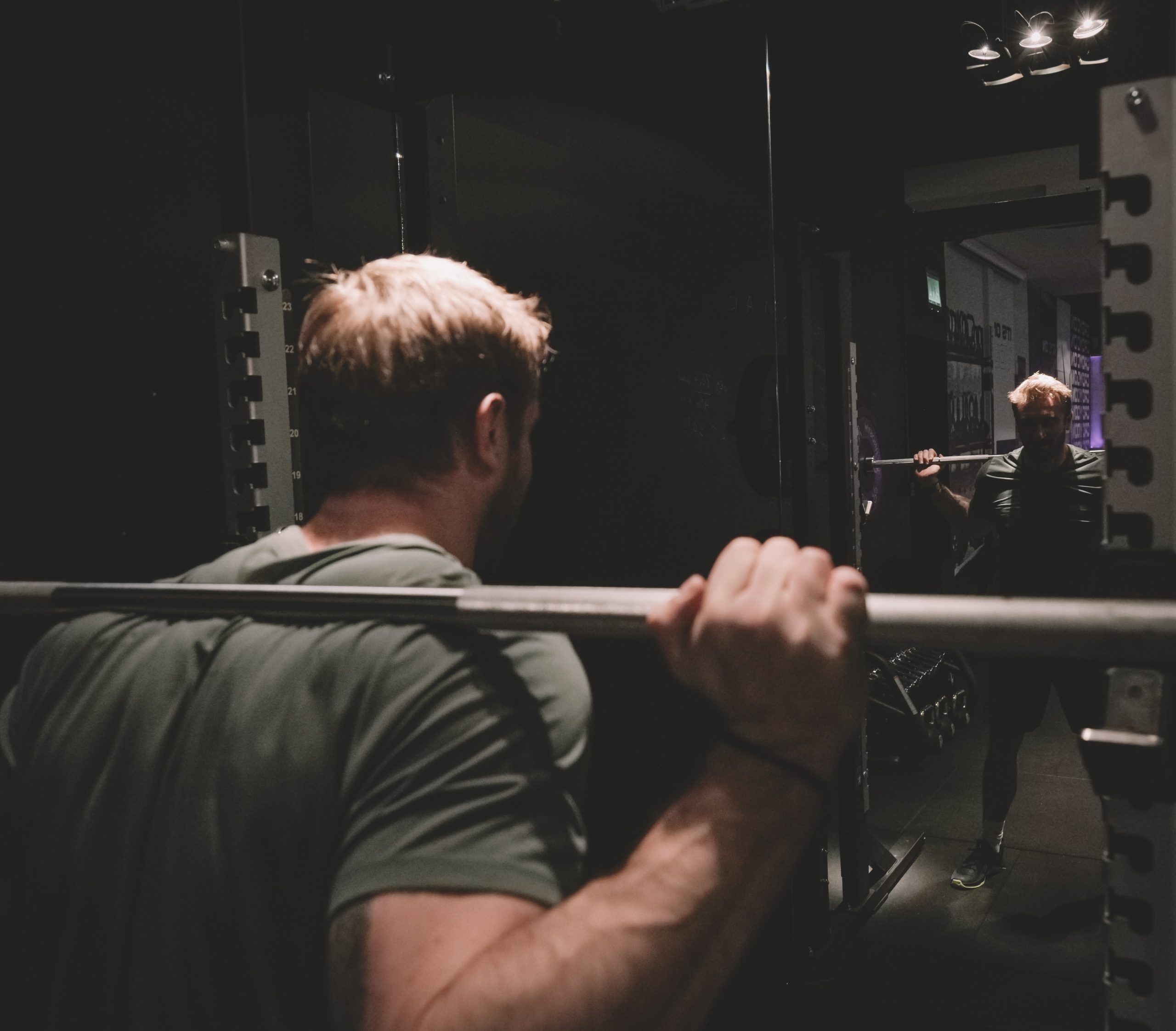
The barbell back squat is often seen as a cornerstone of strength training. It’s a classic movement that’s been a staple for decades in gyms and athletic programs worldwide. But in my 25+ years of experience working with actors, elite athletes, and high-profile clients, I can honestly say I haven’t programmed a barbell back squat for nearly a decade. Here’s why:
Risk Versus Reward: The Lower Back Limiting Factor
Lower back strength will always become the limiting factor when increasing load on a back squat. So if Im looking to build either lower body strength, or change muscle mass / tone in the legs then Ill have to navigate around this. There is (or should be!) a risk : reward calculus with every exercise choice in every workout of every program – for my client base of actors, performers and some general health and fitness, I find a range of other exercises give me a better reward for the relative risk.
Maximising Mechanical Tension for Aesthetics
If your goal is muscle growth or muscle tone – then maximising mechanical tension is the most important factor to consider in exercise selection, the back squat isn’t always the most efficient choice. Mechanical tension is maximised by load at length – if we consider the loading position of the back squat, together with the attachment sites of the working muscles – we can see that during the descent into a squat some muscles are lengthening, some are staying the same length, and others are actually shortening.
Exercises such as elevated split squats, high step-ups / step downs, deficit lunges, and for the very brave nordics and reverse nordics all create significantly more mechanical tension through the lower body while reducing spinal load.
Athleticism and Functional Strength: More Carryover, Less Risk
For clients training for physically demanding roles, these alternatives offer safer, more activity-specific strength development.
Some actors and performers absolutely need strength, power, and athleticism for their roles. But building lower body strength through back squats doesn’t always translate best to the dynamic movements required on set or stage. Exercises that place one hip in flexion and the other in extension – like lunges, step-ups, and split squats – offer a more stable pelvis and lumbar spine position.
This positioning supports better transfer to real-world movement patterns. It also allows more creativity with torque and joint angles, enhancing functional strength and reducing injury risk. For clients training for physically demanding roles, these alternatives offer safer, more activity-specific strength development.
Alternative Exercises I Prefer
If we are thinking bilateral maximal force exercises, I tend to favour front-loaded squats like goblet or landmine squats, which shift load anteriorly and reduce lumbar shear. Hinge variations such as Romanian deadlifts trap bar deadlifts and hip thrusts also provide excellent posterior chain development without excessive spinal compression.
Single-leg exercises are the meat and potatoes of all my lower body programming. Split squats, step-ups, rear-foot elevated split squats, front foot elevated split squats, curtsey lunges and the full range of lateral lunges provide targeted stimulus while supporting better balance and control. These exercises improve movement quality, reduce injury risk, and develop the athletic qualities needed on set or stage.
It’s Not That Back Squats Are ‘Bad’—They’re Just Not My Go-To
the focus is always on individualising programs based on goals, anatomy, and lifestyle – not following convention for convention’s sake
This isn’t to say the barbell back squat is a ‘bad’ exercise. Far from it. It’s a powerful movement with many benefits when programmed thoughtfully, and if bilateral force production is an important part of your sport (Im thinking powerlifters, olympic lifters, rugby forwards, cross fitters) then its really a must have. But, over time, I’ve found that I consistently choose other exercises that better fit the needs of my clients – especially actors and performers who need to balance aesthetics, athleticism, and injury resilience.
In my work, the focus is always on individualising programs based on goals, anatomy, and lifestyle – not following convention for convention’s sake. For many clients, this means prioritising safer, more effective movements that deliver the result without compromising longevity.


Leave A Comment
You must be logged in to post a comment.