

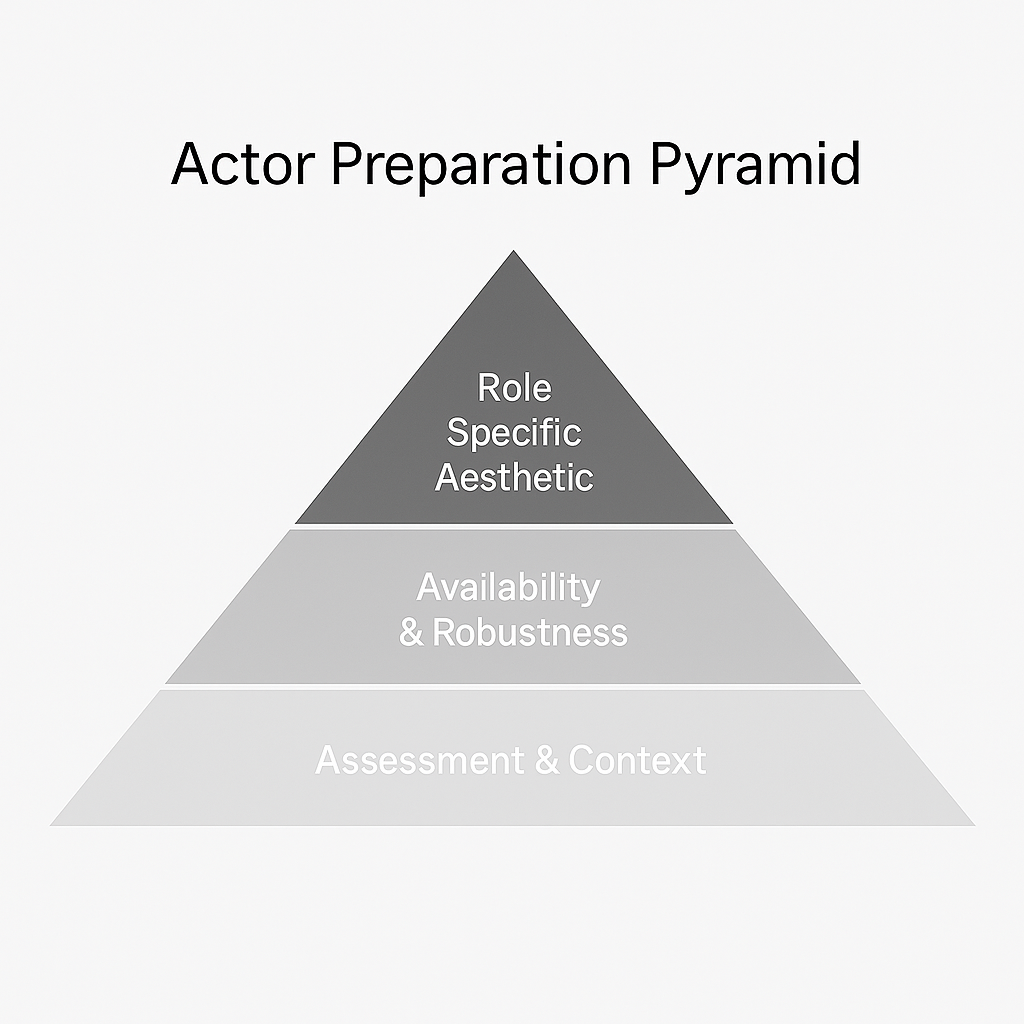
A key call a film production makes during pre-production is selecting a trainer to work with their cast. This isn’t just about muscle. It’s about creating an aesthetic that supports the character and meets the specific physical demands of the role.
They need someone who understands how to create the desired changes to a physique, on time, and safely, while minimising injury risk. This often includes collaborating with directors and producers, as well as the actor, to understand the vision for the character, and working closely with departments like hair, makeup, wardrobe, medical, and stunts.

Experience in this niche is important. A physicality is an actor’s storytelling tool:
- Look for Industry-Specific Experience
Film and television have very different demands from the general fitness industry. Your trainer should understand that an actor’s physicality and aesthetic are key storytelling tools.
They should know how to create the required changes to a physique safely and on schedule, while minimising injury risk. This often includes collaborating with directors and producers, as well as the actor, to understand the vision for the character, and working closely with departments like hair, makeup, wardrobe, medical, and stunts.
Experience working within these niche areas is essential to ensure everything runs smoothly on set.
- Prioritise Availability, Not Just Aesthetics
A good trainer in any setting measures risk versus reward, but in film production this is vital to ensure no scheduling delays. An actor who looks great but is injured or overly fatigued risks delays and complications on set.
Clear communication with production, medical, and pastoral teams is essential to anticipate and prevent issues before they affect the schedule. The trainer often acts as the hub for triaging communication between these teams to address concerns quickly and keep the schedule on track.
- Demand Real Results with a Paper Trail
Any trainer can post before-and-after photos on social media, but in film, real evidence comes from consistent repeat bookings by production companies. The best trainers have direct collaboration experience with directors, choreographers, and stunt coordinators.
They deliver actor readiness on shoot day, not just during preparation. They respect the confidentiality of the process and have the confidence and trust of the actors they work with.
Ask if they have worked on set, managed teams, and delivered physiques and physical readiness under pressure without injury and with no need for do-overs.
- Understand the Importance of Nutrition and Recovery
Physical training is only one part of an actor’s preparation. Nutrition and recovery strategies play a crucial role in achieving and maintaining the desired physique and performance levels.
A knowledgeable trainer will work with chefs, nutritionists, and medical staff to tailor meal plans and recovery protocols that fit the unique demands of filming schedules.
- Choose Someone Who Understands Emotional and Mental Resilience
Acting can be emotionally and mentally demanding, especially when combined with physical preparation. A good trainer recognises the importance of supporting mental wellbeing alongside physical training.
They know how and when to manage workload to help actors maintain focus and confidence throughout their preparation and filming.
They encourage presence, stress management, and resilience techniques to support actors during the process.
- Look for Proven Expertise and Industry Reputation
Experience matters. Seek out trainers with a strong track record working in film and TV, especially those trusted by well-known actors and production teams.
Their reputation within the industry often reflects their ability to consistently deliver results while maintaining professionalism, confidentiality, and trust.
- Ensure Clear Communication and Flexibility
Film productions are dynamic, with schedules and demands changing frequently. A great trainer adapts quickly and communicates clearly with all stakeholders, including the actor, production team, and other departments.
They remain flexible to changes and challenges, ensuring training and recovery plans fit evolving needs without compromising results.
- Emphasise Safety and Injury Prevention
Safety is paramount in actor training. The best trainers prioritise injury prevention through careful programming, monitoring, and recovery strategies.
They understand the importance of maintaining the actor’s long-term health and availability for future projects.
- Partner with Trainers Who Offer Turnkey Services
For seamless production support, choose trainers who provide comprehensive turnkey services, including training, nutrition guidance, recovery protocols, and injury management.
This holistic approach ensures consistent communication and coordination across all aspects of an actor’s physical preparation.
- Value Longevity and Sustainable Results
The right trainer focuses on building sustainable physical and mental resilience that supports an actor’s career over the long term, not just quick fixes for a single role.
They help actors maintain health, performance, and availability across multiple projects and demanding schedules.
FAQ
Do actors in London need specialist personal trainers?
Yes: actors often need trainers who understand the demands of film schedules, choreography, and role-specific physiques. A general PT might not have the same experience liaising with directors or production teams.
How far in advance should an actor start training before filming?
Ideally 8–12 weeks before cameras roll, but the timeline depends on the role. Early involvement ensures physique, fitness, and injury-prevention goals are met without last-minute risks.
What makes film and TV training different from gym training?
Film training prioritises availability and resilience. It’s about keeping actors healthy and camera-ready on long shoot days, not just hitting personal bests in the gym.
Can a personal trainer help with on-set nutrition and recovery?
Yes: the best film-specific trainers work closely with production to coordinate nutrition, recovery, and schedule-friendly plans, so actors peak on the right shooting days.


Leave A Comment
You must be logged in to post a comment.