
A recent interview for Mens Fitness on the process of personal training for actors
How I Train Actors for Screen-Ready Performance
When people ask how actors get in shape for film or television, the conversation often starts with aesthetics. Whilst that is important, film is a visual media after all, its still only part of the equation:
Actor training is about far more than looking good on camera. It’s about preparing the performer’s body to move, endure, and tell a story, all while staying healthy and available throughout a demanding shoot.
As a personal trainer specialising in film, television, and stage work, I’ve spent over 25 years helping actors embody their characters through precise, resilient, and production-conscious physical preparation. Below, I’ll explain what makes actor training different, what it demands, and how I approach it, whether the performer is starring in a major studio franchise or an independent film.
What Makes Actor Training Different?
Most personal training focuses on long-term goals, general health, or aesthetics. Actor training, by contrast, is often time-sensitive and role-specific. The demands usually include:
- Physical transformation (muscle gain, fat loss, or both)
- Movement preparation (stunts, choreography, physical character traits)
- Injury resilience (avoiding lost production time)
- Performance availability (sustaining energy through long shoot days)
- Shoot readiness (looking, moving, and feeling right at the right time)
It’s not just about before-and-after photos. It’s about consistency over weeks or months of filming. Injuries, illness, or burnout don’t just affect the actor. They disrupt the entire production.
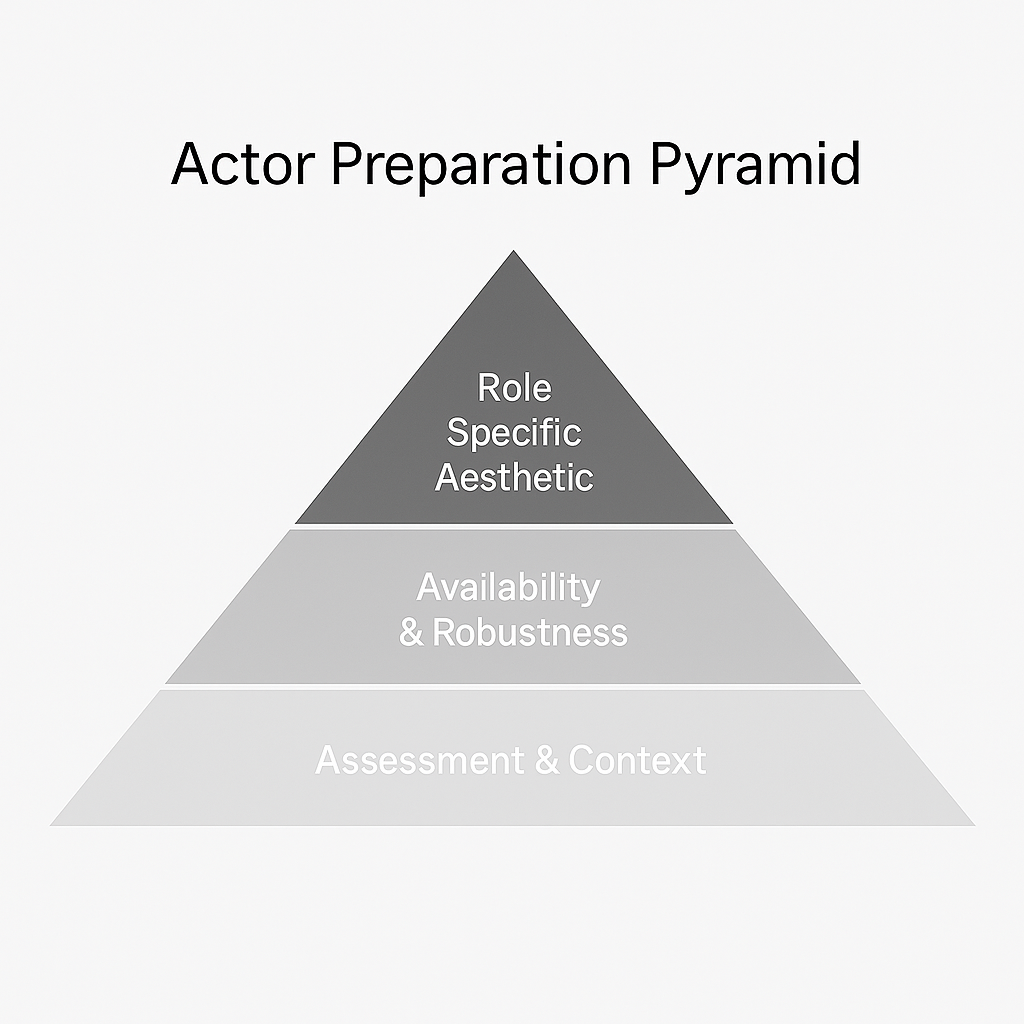
1. Role-Specific Programming
Training is designed around the physical needs of the role. A superhero, an assassin, and a scavenger all move and look differently. I consider:
- Aesthetic targets (leaner, bigger, more defined)
- Movement style (fluidity, strength, agility)
- Costume constraints (what is on show and when, postures, prosthetics)
- Shooting schedule (so the actor peaks at the right moment)
2. Availability and Injury Prevention
An actor’s number one priority is availability. To protect it, we build resilience through mobility, recovery, and fatigue management. I work closely with physios, osteopaths, and stunt teams to ensure every decision take is with the performers health at the fore.
3. On-Set Support
Once production begins, the focus shifts to:
- Maintaining physical condition
- Managing energy, stress, and recovery
- Making subtle visual tweaks based on camera angles or lighting
If I’m not present on set, I coordinate with the actor, chef, director, or assistant to ensure real-time adjustments, even remotely.
Nutrition, Supplementation, and Peak Week
Training doesn’t exist in isolation. Nutrition has to:
- Support physical goals
- Manage energy and mental clarity
- Fit within the rhythm of long, unpredictable shoot days
I advise on macronutrient structure, hydration, supplement support, and, when needed, safe and effective strategies for peak week. These may include fibre, sodium, or fluid manipulation to fine-tune appearance without compromising health.
Hybrid and Remote Coaching Options
Not every shoot is in London. I offer in-person, hybrid, and fully remote coaching depending on production needs. What never changes is the approach. It remains structured, specific, and evidence-based.
Why Actor-Specific Personal Training Matters
An ac tours physicality is part of their storytelling. Their body isn’t just on display. It’s a quite literally the tool of their trade, if we can create a physical presence and a movement ability that matches their perception of a character we are giving them a better tool!
That’s why I collaborate closely with:
- Directors and producers
- Costume, hair, and makeup departments
- Stunt coordinators and medical staff
Actor preparation is a team effort. My role is to ensure the performer is physically ready to deliver; – safely, reliably, and convincingly – from first shot to final wrap.
FAQ: How Actors Train for Screen Roles
How do actors get in shape for film and TV roles?
Actors train with a combination of strength, conditioning, mobility, and role-specific movement. Programs are tailored to the character’s physical demands while keeping the performer injury-free and available for filming.
What exercises do actors do to prepare for a role?
Exercises are customized to the role and can include weight training, functional movement, stunt-specific drills, and cardio for endurance. The focus is on safe, sustainable results that enhance performance on screen.
How long does it take actors to get in shape for a role?
Preparation depends on the role and starting point. Typically, programs run from 6–12 weeks, carefully planned around the shooting schedule to peak at the right moment.
Can actors train remotely or while traveling for shoots?
Yes. Programs can be adapted for in-person, hybrid, or fully remote coaching without compromising results or safety, often with detailed guidance and progress tracking.
Why do actors need a specialist personal trainer?
Specialist trainers understand the unique physical and production demands of acting. They focus on aesthetics, performance, injury prevention, and collaboration with directors, stunt teams, and costume departments to ensure consistent readiness.


Leave A Comment
You must be logged in to post a comment.